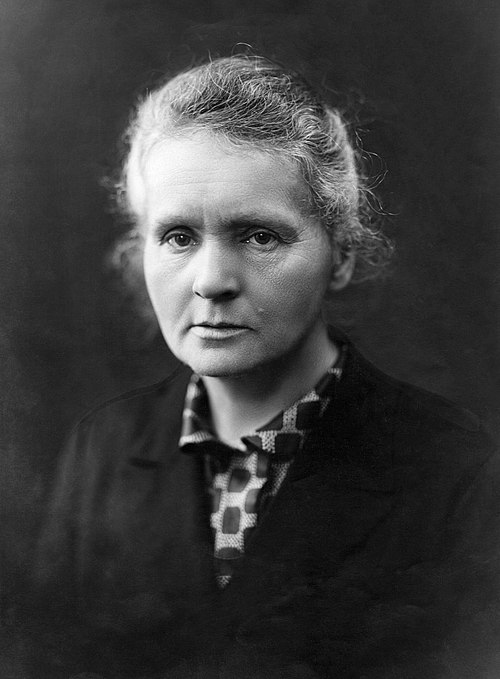
Principle
Imaging has to be where the surgeon operates
My wartime engineering rested on one rule: wounded soldiers are best served when operated on as soon as possible, so X-ray imaging must travel to the front instead of waiting behind it.
I am a physicist and chemist. My science research on radiation discovered two new elements, polonium and radium, isolated radium, and earned two Nobel Prizes, in physics and in chemistry.
Mobile battlefield radiography ('Little Curies')
4 milestones
Developed and deployed portable X-ray units and service workflow for WWI battlefield surgeons.
Received dual Nobel recognition for foundational radioactivity research carried out in Paris.
Chose not to patent the radium isolation process, enabling open research and broader access.
Built education without formal tuition via books, tutors, the Flying University and a home chemistry lab.
My wartime engineering rested on one rule: wounded soldiers are best served when operated on as soon as possible, so X-ray imaging must travel to the front instead of waiting behind it.
I deliberately did not patent the radium-isolation process, so the scientific community could research unhindered, even as a profitable radium industry grew from my work.
In 1890–1891 I began practical scientific training in a Warsaw chemistry laboratory run by Józef Boguski, once Mendeleyev's assistant, while studying at the Flying University and teaching myself.
I insisted that monetary gifts and awards go to the scientific institutions I worked with rather than to me, returned my scholarship once I earned my keep, and shared my first Nobel money with students and associates.